
Renaissance Wall Art
Premium matte canvas, made to order and delivered ready to hang.
- High Quality Prints
- Easy to Hang
- Durable

Renaissance Elegance Woman Portrait Wall Art & Canvas Print
$141.23
Renaissance Noblewoman Portrait Wall Art & Canvas Print
$141.23
Renaissance Queen in Candlelit Court Portrait Wall Art & Canvas Print
$141.23
The Last Supper Sacred Renaissance Masterpiece Wall Art & Canvas Print
$141.23
Renaissance Philosopher Reading Ancient Scrolls Wall Art & Canvas Print
$141.23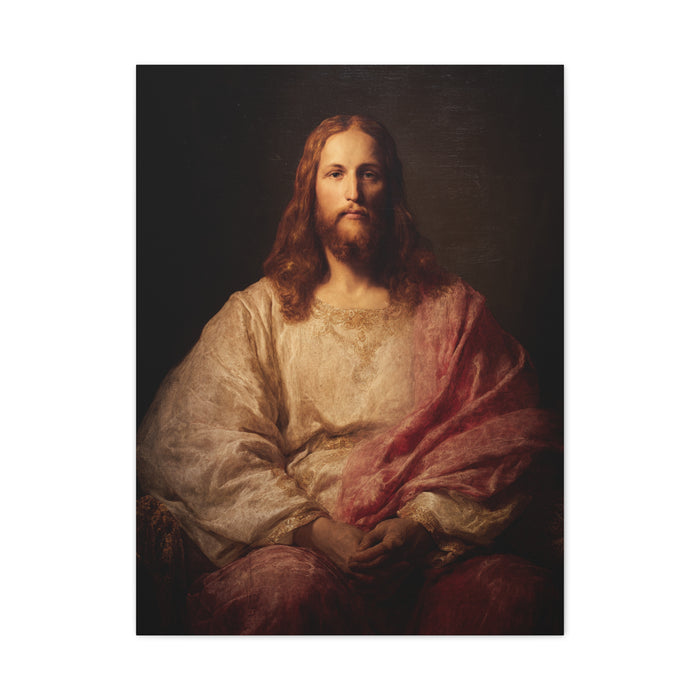
Christ in Divine Serenity Renaissance Religious Wall Art & Canvas Print
$141.23
Graffiti Renaissance Sculpture Wall Art & Canvas Print
$141.23
Pomegranate and Candlelight Renaissance Still Life Wall Art & Canvas Print
$141.23
Aristocratic Corgi in Renaissance Attire Wall Art & Canvas Print
$141.23
Renaissance Garden Peacock Wall Art & Canvas Print
$141.23
Renaissance Streetwear Portrait Wall Art & Canvas Print
$141.23Renaissance Wall Art: A Warm, Narrow Palette
Expect earth. The colours here come from a limited historical range — lead white, ochres, umbers, red earths, a green tending towards olive and a costly blue used sparingly for emphasis — and centuries of darkened varnish have pushed the whole lot warmer and more golden still. The practical effect is that these images occupy a narrow band of warm mid-tones with deep, soft shadow, and contain very little that is bright, cool or genuinely white.
That palette decides the company it can keep. Walnut and oak, brass, unbleached linen, deep green and clay-coloured walls all meet it halfway. Cool grey-blue schemes and stark bright white do it no favours at all: against a cold white wall the aged varnish stops looking golden and starts looking grubby, which is a wall problem rather than a picture problem.
Subject choice changes the register more than people expect. A full formal portrait carries a certain weight and a certain stiffness with it. A drapery study, a pair of hands, an anatomical sketch or a crop of carved architectural detail keeps all the craftsmanship without the ceremony, and reads as far more contemporary once it is hanging in a modern room. Crops in general are the modern way into this material. Taking a fragment — a shoulder, a glance, the folds of a sleeve — and enlarging it turns a historical picture into something closer to an abstract, and it sheds the faintly hotel-lobby quality that a complete gallery scene can carry.
Check your wall against the picture's highlights rather than its darks. Hold the image up and compare its brightest white with your paint: if the wall is the cooler of the two, the whole thing will read as dingy no matter how good the image is. A warmer, softer wall colour makes exactly the same piece look lit from within.